Overview
Itinerary
Day 1: Arrival in Kathmandu
On your first arrival at Kathmandu, Tribhuvan International Airport, one of our representatives will be there to receive you. After being introduced to the staff, your baggage will be loaded in a car, coach or bus as per group size. Then after a short drive to the heart of Kathmandu City, where your hotel is located. Check-in to your nice rooms, refresh from the jet lag, then after prepare for a group briefing to meet other trekkers of the Everest Base Camp trek. In case if you arrive early in the afternoon or even before a few days, then you can tour some UNESCO World Heritage Sites of Kathmandu Valley and even short day hikes near Kathmandu Valley.
Max Elevation: 1,320 meters
Travel Distance: 6 to 8 kilometers
Travel Hours: 30 to 45 minutes
Accommodation: 3 Star Hotel
Meal Included: Welcome Dinner
Day 2: Kathmandu to Lukla (flight) and then Phakding
Day 3: Phakding to Namche Bazaar
Day 4: Namche Bazaar to Tengboche
Day 5: Tengboche to Dingboche
Day 6: Acclimatization day in Dingboche
Day 7: Dingboche to Lobuche
Day 8: Lobuche to Gorakshep
Day 9: Gorakshep – Everest Base Camp – Gorakshep
Day 10: Hike to Kala Patthar and Helicopter Flight to Kathmandu
Inclusion / Exclusion
Inclusion
- Pick up and Drop at Kathmandu Airport from private Car/jeep
- All Meals during the trek (Breakfast, Lunch & Dinner)
- Fruits served fresh in the evening after dinner time
- Teahouse/lodge accommodation during the trek
- Required Permits including Sagarmatha National Park Entry Permit and Khumbu Pasang Lhamu Rural Municipality Permit
- Domestic Flights (Kathmandu-Lukla-Kathmandu) including transfers and taxes
- Experienced and Licensed English Speaking Trekking Guide (Salaries, Food, Accommodation and Transport)
- Excellent Porter service (1 Porter per 2 trekkers, Salaries, Food, Accommodation and Insurance)
- Basic Medical Kit for emergency purposes
- Assistance with emergency helicopter evacuation (covered by the client's travel insurance policy)
- Trekking Equipment Support (Sleeping Bag, Down Jacket, Duffel Bag and Walking Poles if needed, returnable at the end of trek)
- T-Shirt of the company as souvenir
- Government Taxes and Official Charges
- Certificate of Trip completion upon successful completion of trek
- Oxygen Meter for daily Health Check
- Assistant Guide for Group Size of 8 trekkers onwards
Exclusion
- Breakfasts and lunches in Kathmandu
- Hotel accommodation in Kathmandu
- Nepal visa cost (USD 30 for 15 days, USD 50 for 30 days, and USD 125 for 90 days)
- Round-trip international airfares
- Personal travel and health insurance
- Personal spending during trekking
- Beverages and snack foods (tea, coffee, soft drinks, alcoholic beverages, water, etc.)
- Sweets such as chocolate, cakes, puddings, etc.
- Hot showers and charger for your devices at teahouses
- Tips to guide, porter, and driver
- Entry costs of monuments for sightseeing in Kathmandu (around USD 30 per person)
- Additional weight above 10 kg for Lukla flight
Check List
The following packing list will help you in understanding what to take on the trek and what not to. Proper packing plays a vital role in making your trip enjoyable, safe and convenient. Do not pack extra things as they can make the trekking more difficult.
General
- All season sleeping bag
- Down jacket
- Duffle bag
- Light windproof and waterproof jacket
- Day pack
Head, Ears and Eyes
- Warm hat covering ears
- Sunglasses (Ultraviolet protection)
- Buff or neck warmer
- Sunscreen lotion (SPF 35-60)
- Headlamp with extra batteries
Hands
- Gloves for walking (lightweight)
- Winter warm gloves (waterproof)
- Inner liner gloves (optional but recommended)
Upper Body Clothes
- Long sleeve t-shirts
- Thermal tops
- Warm fleece or wool jacket
- Sports bra (for women)
- Windproof and waterproof jacket
Bottom Clothes
- Thermal underwear (trousers)
- Windproof and waterproof trousers
- Trekking pants (warm)
- Hiking pants
- Causal sporty pants
Footwear
- Waterproof trekking boots (very important)
- Sandals for comfortable evenings
- Woolen socks (4-5 pair)
- Sock liners
- Shoes or sneakers (light)
First Aid and Medicines
- Adhesive dressings (plasters)
- Blister cream
- Anti-itch or insect repellent cream
- Pain relief such as ibuprofen
- Acetazolamide for altitude sickness (125 to 250 mg)
- Bandages, gauze and bandage materials
- Water purification tablets
Other Important Documentation and Miscellaneous
- 4 passport sized photos
- Passport original
- Water bottle and water purifier
- Printout of flight information
- Toiletries (toilet paper, soap, wet wipes, towels)
Extra Useful Items
- Trekking poles
- High energy foods/dry foods
- Power bank and charging cable
- Camera and spare batteries/extra memory cards
- Entertainment devices/Music player
Trip FAQs
-
What is the EBC with Helicopter Return Trek?
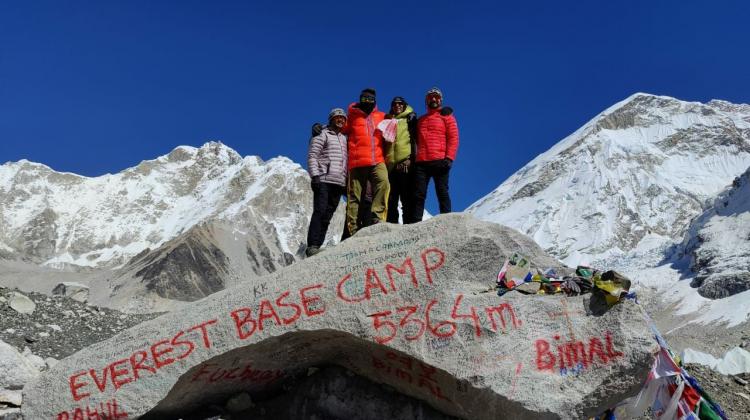
The EBC with Helicopter Return Trek is a 10 days adventurous journey that takes you through trekking to EBC (5,364 meters) starting from Lukla, Namche, and Gorakshep to come back to Kathmandu by helicopter. It offers both trekking experience and helicopter ride during your Everest trip. -
How difficult is Everest Base Camp with helicopter return trek?
Everest Base Camp with helicopter return trek is a moderate to challenging trip depending upon the altitude and walking day of this trail. It has steep uphill trail, rocky path, and low oxygen level above 3,500 meters. But helicopter return makes it easy by avoiding 4 to 5 days downhill trekking to Lukla.
-
What is the maximum altitude that can be attained in this expedition?
The highest point in the expedition is Kala Patthar, which is 5,545 meters above sea level and gives the best views of Mount Everest. On the other hand, the Everest Base Camp is at an elevation of 5,364 meters. It is recommended to be properly acclimatized before moving up to Namche Bazaar and Dingboche. -
Is there any chance of getting altitude sickness during this trek?
Yes, there is a high probability of suffering from altitude sickness since the altitude of the trek will exceed 3,000 meters soon after Lukla. The symptoms of altitude sickness may include headaches, nausea, and tiredness. There are acclimatization days and slow ascending in the itinerary that reduces the risk of altitude sickness; especially in Namche Bazaar and Dingboche. -
What is the best time for the helicopter return trek from EBC?
The best seasons are the spring season (March to May) and the autumn season (September to November). At these times, you will have clear sky and stable weather as well as great mountain views. It is much safer to travel in a helicopter at these times, as you may have problems traveling in winter and during the monsoon season due to the weather. -
How safe is the helicopter return from Everest Base Camp?
Helicopter trips back to Everest Base Camp are safe and handled by certified pilots who are skilled at flying in high altitudes. Trips will depend on the weather situation and level of visibility. If the conditions are not safe for flight, trips are postponed. -
Do I need prior trekking experience for this trek?
No previous trekking experience is mandatory, but having good physical fitness is compulsory. Those starting for the first time and able to hike for 5 to 7 hours a day along with climbing altitudes can do this trek. Training before the trip, such as hiking or cardio workouts, is highly recommended.
All Inclusive Cost
BOOK NOW QUICK ENQUIRY- Best Price Guarantee
- Hassle-Free Booking
- Team of highly experienced Experts
You may also like !!
Our Best Selling Packages You May Like.